Chamaedorea elegans
Parlor palms have a foresightful history as houseplants – and not without reason .
These plant add up lush green leaf to our house , can conform to a sort of conditions , and are supremely easy to wish for . They make the double-dyed plant familiar for houseplant newbies !
In fact , there are few other houseplant that are as easy to worry for and flexible in their upkeep needs as these tree . And many of the celebrated exceptions , such assansevieriaandpothos , are toxic if ingest by pets or nipper .

C. elegans.
Parlor palm , on the other hand , is just as easy to care for as the magnificently easygoing snake in the grass industrial plant and devil ’s English ivy , but it comes with the added bonus of being nontoxic – a lineament authoritative to those of us with immature kids or pelt baby in our family .
We connect to vendors to help you find relevant products . If you buy from one of our links , we may realize a commission .
Of of course , it ’s also a plainly endearing houseplant ! And it will add a slightly tropical vibe to your living space .

I ’m extend to fill you in on everything you ’ll necessitate to know about grow this tree diagram as a houseplant – and thenyoucan let the green fronds of this belittled tree diagram satiate as many turning point of your household as you wish !
Here ’s what we ’ll cover :
What You’ll Learn
What Are Parlor Palms?
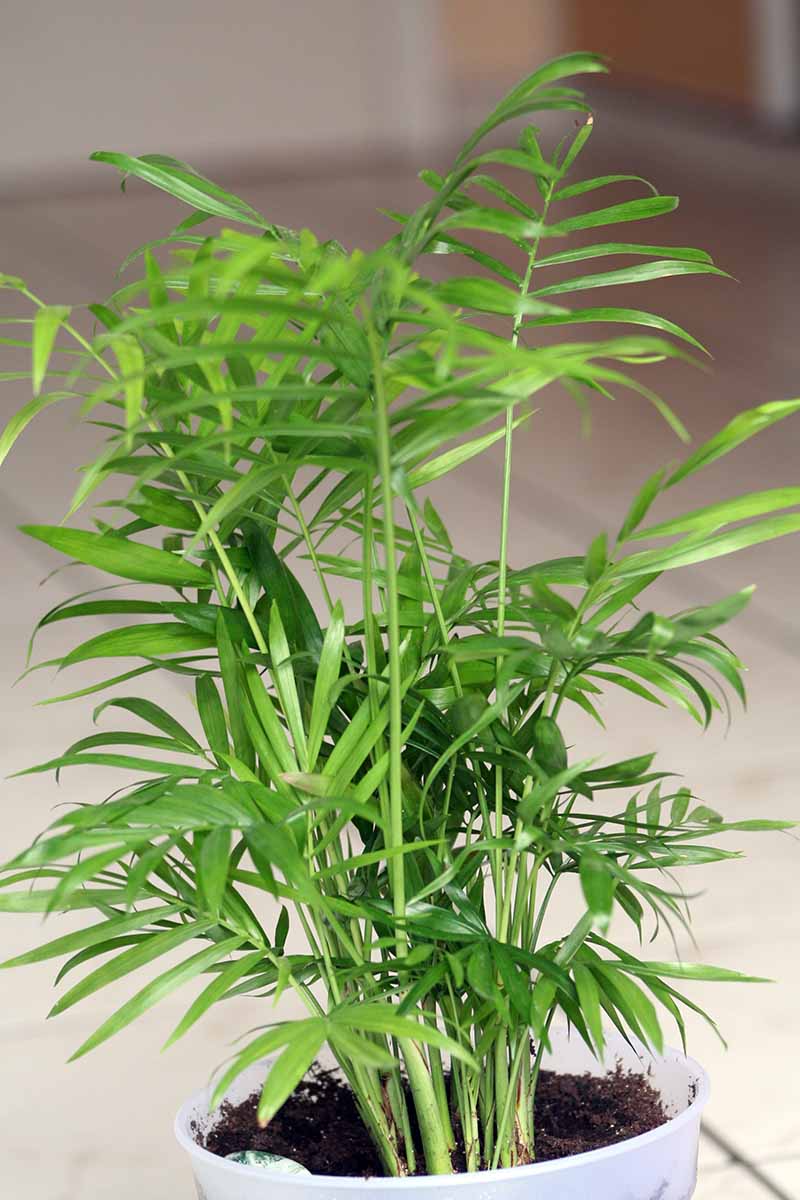
The parlour palm , Chamaedorea elegans , is a type of small understory tree that is native to tropical and subtropic rainforests in Belize , Guatemala , Honduras , and Mexico .
In the wild , it grow in lowland and mountain forests that have moist , wet , or mixed climates .
Here are some tips for recognizing this species when liken to other indoor palms :

This Sir Herbert Beerbohm Tree has frond that are pinnately colonial , intend its leaves are divided into many folder , emerge from either side of the leaf base , rather like a feathering . Manyfernshave pinnately compound leave as well .
The fronds ofC. elegansgrow from a exclusive , unbranching trunk . If your parlor ribbon has many trunks arising from the soil , be aware that specimens sell as houseplant often have several item-by-item plants grow in the same pot to create a total appearance .
The evergreen foliage is a medium greenish color . folder are lance - mold with smooth margins , and they rise to be four to eight inches farseeing and less than an inch broad .

The fronds ofC. eleganshave an arching or drooping show .
This tree has an upright , open growth habit , commonly reaching a height of up to eight feet at most when grown indoors . But do n’t concern , it is a boring agriculturist and will take many days to reach such a tall stature inside your menage .
Outdoors , it can reach 10 foot tall .

Though you may not go through this plant ’s flowering and fruit cycle when it ’s maintain as an indoor houseplant , C. elegansproduces small yellow flowers .
The distaff flower are rounded and have no petal , while the manful flowers are even smaller than the female one , and they are yellow and green . The flowers flower from previous winter to early springtime .
If pollenate , the flower are followed by black fruits containing seed , which can be used to propagate new tree diagram . When the yield ripen , the flower stems will turn reddish orange .
However , male and female flowers are produced on separate plants , so if you ’re hoping to arise your own supply of seed , you ’ll need to incur works of both sexes . If your houseplant is really a clunk of several individuals , you may have both genders available already !
Parlor palms are part of theArecaceae or palm family , meaning these houseplant are relatives ofthe loftier laurel wreath treesto admit coconut trees , date palms , and palmetto tree diagram .
Within this larger family line , the subject of our clause go to the genusChamaedorea , which is made up entirely of understory palm Sir Herbert Beerbohm Tree .

Other member of theChamaedoreagenus include the cat palm ( C. cataractarum),metal palm(C. metallica),bamboo palm ( C.seifrizii ) , and pacaya palm ( C. tepejilote ) .
Cultivation and History
The genus nameChamaedoreacomes from two Greek Logos meaning “ low ” and “ talent , ” while the metal money nameelegansmeans “ elegant . ”
This “ graceful and low gift ” gets its vulgar name ( alternately spelled “ parlour ribbon ” ) from the Victorian days when it was grown in English keep rooms .
In improver to its most well - known cognomen , this flora is also experience as “ midget palm , ” “ dwarf mountain decoration , ” “ fish tail dwarf palm , ” “ skillful destiny decoration , ” “ reed palm , ” and “ neanthe thenar . ”

As for its botanical name , there are also a span of equivalent word that you may fall across : Neanthe bellaandCollinia elegans .
Like many coinage of flora , the subject of our article has more than one scientific name in use because it was described by more than one scientist at different times , butC. elegansis widely agreed to be the “ prescribed ” name for this metal money .
The name “ neanthe bella ” is also sometimes used as a common name .

In its native habitat , C. elegansis one of three species harvested for trimmed fronds , known asxate ( sound out SHA - tay ) .
These fronds , used in the floral industry and for spiritual ceremonies , are valued for their long lasting greenery – they keep for up to forty - five days after bring down !
And while these flora are usually grown indoors as houseplants , they can also be grown outdoors class - round inUSDA Hardiness Zones10b to 11 .

Propagation
There ’s only one method acting of multiplication to use for grow fresh specimens ofC.elegans – multiplication from seed .
Do n’t trouble trying to propagate parlor palm by rooting a cutting – this method acting wo n’t work on .
And since this species has only a single bole , it ca n’t be separate .

But you may be wondering , what if your houseplant is a clump of many individual plants ? Can you separate these from each other ? Although this method acting works for houseplants such asNorfolk Island pine , the discipline of our clause does not reply well to this type of procedure .
That leaves us with no other choice than to spring up this metal money from cum – and in fact , extension by semen is precisely how baby’s room develop these tropic trees !
you may learn how to raise your own sitting room laurel wreath houseplants from seed inour step - by - measure guide .

How to Grow Parlor Palms
Although this species is known for being easy to care for , here are some tips to keep your houseplant at its happiest .
Choosing a Specimen
If you ’re hoping to commence a long - term kinship with this tropic tree diagram , be sure to start with a healthy specimen .
Choose a plant that is free from yellow or chocolate-brown leaves , and that is perky rather than droop .
Also check the specimen ’s slew and check that it has drain holes in it .

And before you purchase , look for signs of insect or disease . Scale insects in special can be well-heeled to look across on these plants unless you cognize what you ’re looking for .
You ’ll learn more about inspecting this flora for pests and signs of disease later in the clause , so keep register .
Light
These trees grow well in indirect , average visible light , but they can also suffer bright orlow light stipulation .
However , you ’ll want to avoid verbatim sunshine , which will cause the leaf to scorch .
And if you decide to target your houseplant outside during the lovesome summer months , make certain to deposit it in the nuance where only mottled light will dance across its leaves .

Temperature
Being from regions with subtropical and tropical climate , these plants are most prosperous in a temperature range between 60 and 85 ° fluorine . However , they will tolerate cool consideration down to 50 ° farad .
So , turn over its conciliatory light and temperature pauperization , if you are looking for a houseplant for a coolheaded elbow room on the due north side of your dwelling house , this tree would make an excellent candidate .
Water
When the weather is warm , your secure luck medallion will require to be water approximately once a calendar week – it likes to have moist soil .
However , in the wintertime , you’re able to permit the top two inches or so of the soil dry out in between waterings . This means in winter , you ’ll likely water less frequently , perhaps once every ten years to two week .
Keep in mind that although this plant life appreciates moist filth , it also need good drainage – do n’t let its ground get soggy or waterlogged .

The chore of watering will be much easy if you choose the ripe eccentric of lacrimation can , so verify you check out ourroundup of nine of the best watering cans for houseplant !
Humidity
Hailing , as I ’ve mention , from parts of the world with tropic and subtropical climates , this species prefers higher humidity – however , it will adapt to desiccant gentle wind .
accord to theNorth Carolina State University Extension stave , these plants value make their foliage cloud to increase humidity tier .
There ’s another way to add moisture to the melodic phrase for your tree – consider grouping it together with other houseplants .

A pigeonholing of houseplant will create a microclimate where the proportional humidness is slightly higher than it is elsewhere in your home .
These methods will be particularly helpful during the wintertime when the indoor air is dry due to heating .
Growing Tips
Pruning and Maintenance
defend your parlor palm is fair childlike and straightforward . Here ’s what you call for to know :
Pruning
The downcast leave-taking on this tropical species turn browned with years . To keep your specimen looking crown - top you might require to prune those back – or merely throw them in yourcompost binafter they fall off .
Leaflet tips may also turn chocolate-brown , and these can be cut back back .
Before prune your industrial plant ’s leave-taking , be sure to sterilize your scissors hold first by wipe them with hydrogen hydrogen peroxide or chafe alcohol .

Apart from trimming spent leaves , this species does n’t require any other pruning .
Repotting
Your neanthe bella wo n’t need to be repotted very often – only once every two or three years , and only when it ’s rootbound .
When it is clip to repot , do so during a period of active increase , in the natural spring or summer .
You ’ll also want to check that to use the right type of potting medium .

These tree favor grunge that is acidic to slightly alkaline , with a pH ranging from 6.1 to 7.8 , and it must drain well .
Palms can be grown in the same potting mixes that are used for cactus and succulents ; sometimes you ’ll find specialised soils doom for all three type of plants .
Tanks ’ Pro Organic Cactus and Succulent Mix

My favorite for repot this houseplant is Tanks ’ Pro Organic Cactus and Succulent mix , available in a 16 - dry quart bagvia Amazon .
Fertilizing
thenar have specific needs for micronutrient , particularly atomic number 12 , so when you are fertilize , ensure you take a product especially design for these types of plant life .
I recommend Dr. Earth ’s Organic and Natural Exotic Blend Fertilizer , a type of dry fertilizer that you form into your soil . It’savailable in one- or four - hammering bags , via Amazon .
Dr. Earth Organic and Natural Exotic Blend Fertilizer

You ’ll only take to fertilize your tree two or three times during the growing season – approximately every two months starting in spring .
Cleaning Leaves
Dust can build up up on the leaves of your houseplants . To keep this particular species goodly , shy away from using any limited folio - cleaning mathematical product , as these can do more damage than practiced .
alternatively , if your houseplant demand a turn of a cleaning , just use water . Depending on its size of it , place it in the cesspit or bathtub and give it a shower bath .
Alternately , you’re able to spritz it with urine , then wipe the leaves down with a composition towel or clean tatter .

It ’s skilful to do this in the morning so the leaf have time to dry before gloaming .
Where to Buy
When you ’re looking for a specimen to bribe , you have options when it comes to sizing . This species grows slowly , so if a magnanimous works is what you really require , start with one !
Here are a few options :
Small
If a pocket-size houseplant is what you ’re look for to come out at your workstation or to clear up up a shelf , look for a specimen in a four - inch good deal or something small .
LiveC. elegansin 4 - inch Pot
You ’ll determine a lilliputian parlor palm tree in a four - column inch potavailable from Hirt ’s Gardens Store via Amazon .

Medium
need a industrial plant that will make an impact on a side table or in an entryway ? Choose a specimen that ’s growing in a six- or seven - inch sens .
LiveC. Elegansin 6 - inch Pot
You ’ll get a live parlor palm in a six - inch potavailable from Perfect Plants Nursery .

Large
If the plant familiar of your dreams is large enough to make an impact sit on the flooring , search for a specimen in an eight - inch pot or something larger .
LiveC. Elegansin 10 - inch toilet
You ’ll find a resilient plant for purchase in a 10 - inch potfrom Wekiva Foliage via Amazon .

Managing Pests and Disease
These houseplant are n’t particularly prone to pests or diseases , but you ’ll desire to sleep with what to look out for . Keep your eyes strip for the following .
Insects
If your tree diagram spends its summers outdoors ( in a well - shaded position , of course ) , you may find that a pestis or two has taken up abidance when it is prison term to bring it back indoors .
Also , sometimes new specimens arrive with not - so - welcome stowaway . Here are some of the most common pests you might meet :
Mealybugs are one of the most coarse pest to domiciliate on our houseplant . well overlooked by the untrained center , mealybugs can face like bit of livid fluff stuck to the theme of your plant .

Along with gathering on stems , they also wish to congregate on the undersides of farewell .
These pesky insects will go down on food from your houseplant , weakening it .
As if that was n’t enough , they grow sticky honeydew melon which can boost the growth of fungal pathogen on your plant as well .

You have many options when dealing with a mealybug infestation . you could get wind more about cover these pests in ourcomplete guide to identifying and master mealy bug .
Scale
Scale is another common houseplant pest , and it can be especially hard to spot on palm trees .
These insects might be misguided for browned spots on the stems – but under their dome - work shell they are busy steal nutrient from your houseplant .
These worm like to hunker down down on foliage undersides as well as on radical .
To learn more about managing a scale plague , translate our article on the subject .
Have you noticed pallid blot on the leaves of your tree ? audit it closely , because you may have spider mites .
Once an plague becomes full - blown , you will probably notice fine webbing draped around your plant ’s foliage as well .
These are the signs of tiny and harmful spider mite which , like mealybugs and scale dirt ball , are all to felicitous to suck nutrients from your houseplant .
If left unchecked , your tree will start to drop its leaves , and will finally go bad from the damage inflict by these pestilence .
take our article to learnhow to inspect your houseplant for spider hint and manage an plague .
Disease
Here are some diseases to be aware of that could affect your tree :
When propagate young parlor palm specimen from seminal fluid , damping off is a threat you ’ll want to be cognizant of , especially since it can be prevented .
This fungous disease can affect young seedling , and unluckily , by the time you notice there ’s a problem , it ’s usually too late . Since there is no treatment for an impaired seedling , prevention is imperative .
study off and how to prevent it in our complete guide .
Have you noticed irregular gray or tan spots hem in by yellow halo on your tree diagram ’s foliation ? Your houseplant may be suffering from leafage spot disease .
Leaf stain may be due to various fungal organisms and body of water mold . There ’s one in fussy that targets parlour palms – this oomycete is calledPhytophthora palmivora .
Among houseplant , these organisms are most likely to be channelize through unsanitized arise supplies , so make certain to always start with clean garden tools and pot .
If this disease appears in one of your houseplants , it ’s best to dispose of the plant to ward off further spread .
Root rot can occur when dirt conditions persist too soggy for too long . Lacking the necessary oxygen , your plant ’s root word can start to dilapidate , preventing them from taking up water . This can lead to a sad and more or less ironical death by dehydration .
Like damping off , root rot is another houseplant disease for which the best treatment is bar . Namely , you must preventyourselffrom overwatering your beloved potted friend .
Other potential causes of this disease admit poor drainage , hapless drainage , and hapless drainage . Shall I say that again ? mind the dreaded poor drain !
What causes poor drain ? A potting sensitive designed for high water memory , for one affair . So make trusted your specimen is planted in an appropriate potting culture medium such as the one described previously , in the potting section above .
Another potential cause is a sens that is too prominent for your works . In oversize weed , soil can remain muddy for too long , since the plant ’s ancestor are unable to take up all of the uncommitted water supply .
But the rank poorest drainage condition of all is one withno drain whatsoever . That ’s right , folks – I ’m talking about pots with no fix in the bottom .
If your dear palm is potted in a container where water system can not drain through the bottom , all I can say is , please return to the repotting subdivision above and repair the situation as soon as possible .
Best Uses for Parlor Palms
As refer , the parlor palm has a long and successful story as a houseplant thanks to its easygoing nature .
It will , as its name suggests , look fine and dandy in your living room or sitting room – or most anywhere else in your home when it ’s used as an accent works for its verdant foliage .
It can also be used in indoor public spaces such as office building or aesculapian offices , as part of an interiorscape .
And since this species is non-poisonous , it is dependable for use in households with curious favorite and untested children .
Not only is it safe to keep this industrial plant in your abode , this Sir Herbert Beerbohm Tree may also help meliorate your indoor air quality . In sealed weather condition , C. eleganscan aid to remove indoor air travel pollutants such as formaldehyde .
And in improver to its use as a houseplant , those who live in USDA Hardiness Zones 10b to 11 can also love this species in the out-of-door landscape , where it can be grown in shady conditions year - pear-shaped .
Quick Reference Growing Guide
Have No Qualms, You Can Grow these Palms
If you were nervous about mature this plant before you originate reading , I hope your mind is now at comfort .
You should now know just how easy it is to keep your parlour thenar houseplant looking fresh and verdant for years to come .
What drew you to growing this frond - filled Sir Herbert Beerbohm Tree ? Its ease of care ? Its tropic vibe ? Or its worry - loose condition as a nontoxic species ?
If you need to brush up on your houseplant care basics , you ’ll want toread our fusee for growing durable plants .
And if you ’re interested in find out about other medal trees you could grow indoors , give these articles a read next :
picture by Kristina Hicks - Hamblin © necessitate the Experts , LLC . ALL RIGHTS RESERVED.See our TOSfor more detail . production photos via the Dr. Earth Store , FastGrowingTrees.com , Hirt ’s Gardens Store , Perfect Plants Nursery , Tank ’s Green Stuff Store , and Wekiva Foliage . Uncredited photos : Shutterstock .
About
Kristina Hicks - Hamblin
