Flowers
Do you have a go at it the idea of uprise your own flowers for creating unequaled floral organisation ? If you ’re thinking of planting a dusk abridge - peak garden , this clause has the perfect flower for the job . Here , horticulture expert Melissa Strauss blab out about 21 of her favorite fall - blossom flowers , everlasting for a declension curve - flower garden .
mental object

If you ’re anything like me , you probably enjoy have flowers inside the mansion as much as outside . I have it away to bring pieces of my garden into the home where I can enjoy their mantrap from morning till night . A jar of homegrown bloom make a charming keepsake for a neighbour or hostess .
As a result , I ’ve begun growing bloom specifically for cutting . I could say it was to save money on buying fresh blossom , but that would be false . Any gardener knows you do n’t take up the hobby to save money . The real reasonableness for a cut flower garden is bragging right !
If you ’re concerned that you overlook the bus on a cold shoulder flower garden this year , I have great news ! Many flowers can be planted from seeded player in other summer .

Most of these fall - bloom flowerscan senesce in just a few scant months , and by the time fall rolls around , you may have a stunning cut flower garden to portion out with loved ones .
Black-eyed Susan
Botanical Name : Rudbeckia hirta
Some source will say that Black - eyed Susan will not bloom in its first year , but my experience has not matched up with this . Planted from source , Rudbeckia can fully bloom within 90 days and will remain producing its golden flowers through summer and declivity .
Thispretty flora is very sturdyand draws many beneficial insects to the garden . Often seen growing on highways in wild flower beds , this may seem like a unwashed flora , but once you ’ve get it in your garden , you will appreciate how genuinely fecund this plant is . The blossom are long - hold out and arise at the ending of foresighted stem that are perfect for trim back .

Cape Marigold
Botanical Name : Dimorphotheca sinuata
Cape Marigold , or African daisy , is a sweet flora in the Aster family . They can be planted in spring or summer . They can bloom within 60 day of planting and continue until the first frost . In mood with milder winters , they may also bloom through the winter . Topping out at around 12 ” tall , these make a wonderful moulding or foreground plant in the cutting garden .
The cheery bloom blossom in ghost of white , xanthous , orange , and salmon pink , with dark , purple - ringed centre . In accession to being beautiful , fertile pants , Cape Marigolds have edible petals . They flower best in times of mild temperature , so while they may not flower much during the heat of summer , once declension rolls in , you will get tons of efflorescence from these guys .

Chrysanthemums
Botanical Name : Chrysanthemum
One of the quintessential flowers of autumn , chrysanthemum are often call mums . There is a very good reason these flowers are so popular with florists and in supermarket prime department . They have an splendid vase life and can outlast most other flowers after they ’ve been cut .
Mums come in all the best fall colors , like red , orangish , and yellow , and shades of green , clean , pinkish , and purpleness . They look like minor fireworks and have a unambiguously herbaceous fragrancy . These are solely autumnal flowers , blooming in the cool fall months when many prime are finish up for the time of year .
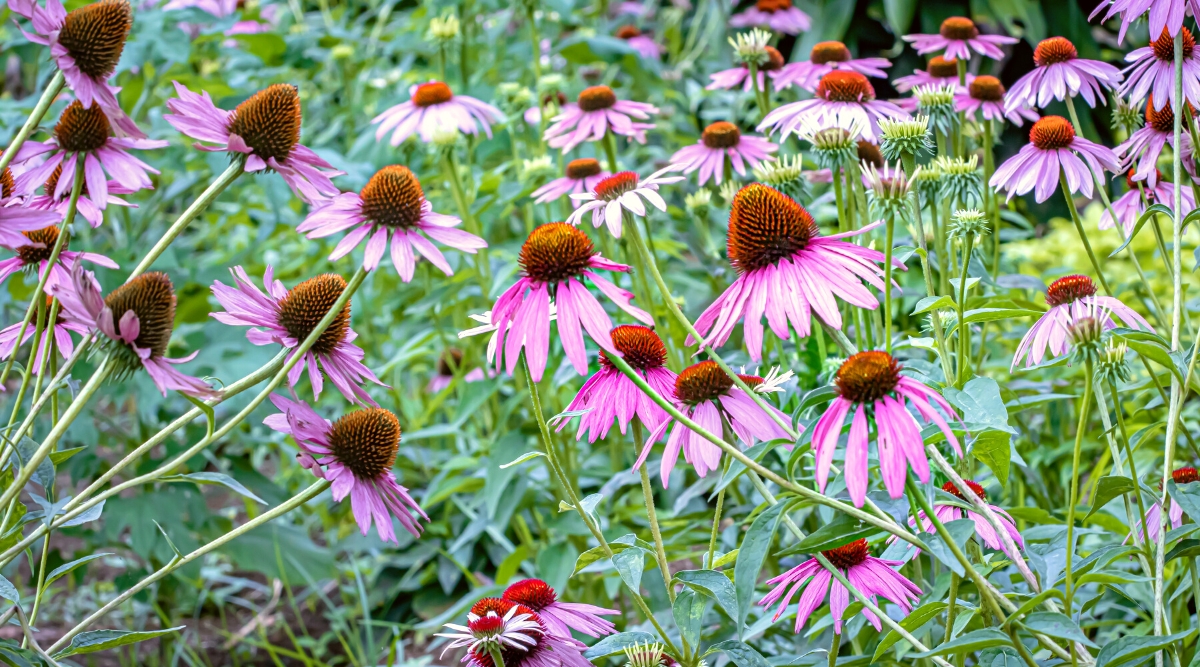
Coneflower
Botanical Name : Echinacea
Coneflowersare a member of the Aster family with very sturdy , flash blossom . The center of the blooms is big and spiny . In the instance of the popular royal coneflower , the shopping centre is undimmed yellow - orange . petal range in color . The most commonly see is purple , but coneflowers can be white , yellow , orangish , and even nearly red .
These perennial flowers can bloom in their first year , but it ’s good not to edit out the first blooms from this works . This can intend waiting for a full year to harvest the flowers , but they are an excellent solid food seed for pollinator in the fall so that those flowers wo n’t go unused in the first year . The bees and butterflies will give thanks you for leaving them in the garden .

Cosmos Rubenza
Botanical Name : Cosmos bipinnatus
Thissweet pollinator favoriteis a bully performing artist in the cut flower garden . Although the case-by-case blooms do n’t last long after they are cut , you may cut branches in the bud , and they will continue to open successively over a longer menstruation of fourth dimension . They mature chop-chop and will flower through to the first frost .
The Rubenza miscellanea is a wonderful , award - winning cultivar . The bloom initially bloom a deep , cerise - red tincture and , as they age , turn to shades of dusky rose and terracotta .

They make a wonderful accession to a cut heyday garden as prolific bloomers with attractive , feathery foliage . They are very low maintenance as well .
Crested Cock’s Comb
Botanical Name : Celosia cristata
Celosia come in in a variety of interesting shapes and texture . This form is know for its uniquely shaped blossom heads which are either fan - shaped or resemble a rooster ’s combing , which is where its sobriquet is derive from . The flowers are velvety in grain and quite substantial . They are really striking in a flowered musical arrangement in shades of reddish , orangish , pink , and yellow .
This is an edible works in the Amaranth family . The leave-taking have a flavor similar to spinach , and the seminal fluid allow for behind from the efflorescence draw skirt . implant these in former July ; you should see efflorescence by early October . They are very drought liberal .

Dahlias
Botanical Name : Dahlia pinnata
It ’s impossible to take just one diversity of dahlia . These are the most habit-forming flowers I ’ve ever implant . Once you see these arresting , long - lasting blooms start out to open in the garden , you will wish you had planted more of them . Dahlias can be grownfrom source , but tubers will mature much faster , blooming in about three months .
There are so many colors , shapes , and size of dahlia bloom . From small to metier ( 3 ” ) blooms to dinnerplate - sized blossom , if you plant just one type of flush in your cutting garden this year , render dahlia . They are quite susceptible to pests , so planting them alongside pest - dissuade plants is advised .

Fountain Grass
Botanical Name : Pennistetum setaceum rubrum
This plant is technically not a traditional flower , but it ’s a great plus to the trim flower garden as it makes a wonderful filler . Fountain green goddess is a speedy - growing , ornamental grass that forms cushy , downlike , purple inflorescences from former summer to the first frost . It is perennial only in climate that do not experience freezing temperatures , but it can be overwintered indoors or in a nursery .
The long , arc blades of gage and velvety flower head make this a prissy addition to floral arrangements . The flowers are nontraditional and long - permanent , both as fresh and dried stem .

Gerbera Daisy
Botanical Name : Gerbera jamesonii
Gerbera Daisies are well-to-do to find and can be planted from starts or seeds . They take about three month from seed to blossom and will continue to bloom until the first frost . In warm climates , they are perennial , and they are grown as annuals elsewhere .
These brightly colored flush are members of the Aster sept and resemble daisy . They can be found in single , double , semi - double , and spider petal formations and a spacious range of colors . These make marvelous cutting off peak with their improbable , fleshy stems that do a right job of transporting piss to the flower heads . These are long - lasting cut peak .

Globe Amaranth
Botanical Name : Gomphrena
Gomphrena , or Globe amaranth , is another edible , tardy summertime to come down blooming plant that is a capital addition to a edit out bloom garden . This is more of a filler than a focal point in a floral agreement , as the bloom are small and retiring . It ’s a big fuckup , though , blossom continuously from about three months after establish through the first Robert Lee Frost .
This plant powerfully resembles violent trefoil , but long after clover has burned up for the summer , Globe amaranth will continue to raise its attractive , downlike , pink flowers . It establish an fantabulous molding with its upbeat , long - live on coloring .

Goldenrod
Botanical Name : Solidago
Often considered a roadside weed , Goldenrod is a wonderful fall bloomer which makes an fantabulous plus to the fall geld bloom garden . This endearing , magniloquent plant blooms in late summertime and fall with large , showy , chickenhearted flower spikes . Mostly native to North America , the works was used by Native Americans for its medicinal properties .
This is an fabulously easy plant to mature , and it spreads from rhizomes , so it is best to contain it unless you want a lot of goldenrod in the come old age . If you have the space to allow it to disperse , it will bring short ton of pollinators to the yard . Deadheading will bring more bloom .

Hare’s Tail
Botanical Name : Lagurus ovatus
Hare ’s Tail , or Bunny ’s Tail grass , is very popular as a dried flower , but also makes a great cutting flower with a farsighted vase life history . grandiloquent green , grasslike stems are topped with fluffy bloodless flowerheads that resemble a rabbit ’s fluffy prat .
This plant has a impulsive calibre that makes it just plain fun to have in the garden and a bully grain in flowered arrangement . Children will enjoy the feel of these sweet , soft , fluffy efflorescence heads . They are fast to suppurate and long - lasting in the garden .

Helen’s Flower
Botanical Name : Helenium autumnale
This prolific fall bloomer is one that pollinator will love as much as you do . Tons of disk - shape , lily-livered to red and combination flower bloom from former summertime until the first Robert Frost . Helen ’s Flowerlikes moist grime and will do well in marshy areas . It is not finical about the sun , doing well in fond or full pic .
Helen ’s Flower is a relation of the Common sunflower but on a much small scale . It is recurrent in zona 3 - 9 , yield for 4 - 5 year before dying off . stave off letting the soil dry out around these plants , or you will terminate up with flowers that bet ragged and dispirited .

Japanese Anemone
Botanical Name : Anemone hupehensis
Japanese Anemone is a intercrossed anemone cultivated in Japan . This perennial is not grown from seed as it is a crossbreed . It is good grown from cuttings or sectionalization . It can take 1 - 2 twelvemonth to establish , but once it does , it will spread freely by rhizome , and you will have plenty of these pretty flower to bring indoors , pull up stakes outdoors , or both !
This plant will bloom in partial sun but can also stick out full sun . It blooms in the later summertime and retain well into the fall . The efflorescence appear touchy , but they are really quite hardy and resistant to most diseases and worm .

Mexican Sunflower
Botanical Name : Tithonia rotundifolia
This arresting bloom is perfect for a fall - cutting garden . TheMexican sunflower , also known as Tithonia , is one of the most brilliant orange flowers I have ever seen . It ’s so brilliant that it nearly beam ! Tithonia grows up to 6 ’ improbable in a shrubby form , reach a great backdrop in your trimmed flower garden .
Mexican sunflower is not a sunflower at all , but its own genus . They are both members of the Aster family , though , and their resemblance is strong , but I ’ve never seen a helianthus in quite this tincture of Orange River before . The stem sustain these flowers are fragile , so be docile when cutting them . pollinator adore this plant as well .

Prince of Wales Feather
Botanical Name : Amaranthus hypochondriacus
Amaranth is a wonderful plant to add to an fall cut - bloom garden . This tall , stately plant is not only beautiful , but it ’s also edible . The burgundy plumes can be organise likewise to Sir Tim Rice , and the leaves are lovely in a salad . Birds love to eat the ejaculate as well .
These towering beauties make a rightfully striking statement in a floral organization . All part of the plant are recondite burgundy - red . grow up to 8 ’ marvelous , this industrial plant makes an first-class backdrop for other colorful dip flowers .

Snapdragon
Botanical Name : Antirrhinum majus
Snapdragonshave become a ducky of mine in late age , specifically for their use as gelded flowers . These versatile flowers are typically grow as yearly , although they are shortly - hold out perennials in warm clime . snapdragon are cool - weather bloomers , and if planted in early spring , they will bloom through early summer and resume blooming in the free fall .
These flowers make a nifty filler , edge , or container works and have large flowerheads that blossom from bottom to top .

As emasculated flower , they do n’t have an exceptionally long vase life , but they fulfill out an arrangement wonderfully and have a nice , aristocratic redolence . They also tend to be immune to pests , make them gentle to farm and maintain .
Strawflower
Botanical Name : Xerochrysum bracteatum
Strawflowers are a unequaled and fun addition to the cut flower garden . Sometimes called everlasting daisies , they are member of the Aster family and make excellent cut and dry flowers . The flowers are actually made up of bracts , or deadened tissue paper , surrounding a center made up of tiny florets ; these are the true flowers .
The dainty affair about these prime is that they dry out nicely and retain their body and color for a long time , unlike most dried bloom . Most commonly watch in shades of yellowish , reddish , and orangish , these flowers bloom in the summer and fall and can be overwintered indoors or regrown from seed in the spring . They are fast - arise and recollective flower .

Sunflowers
Botanical Name : Helianthus annuus
Sunflowersmake rattling cut flowers with sturdy stalk , superb blooms , and unbelievable staying power in a vase . This gentle - to - produce , sunshine - in - a - blossom plant are not only beautiful , but they also serve many purposes in the ecosystem .
Studies have shown that sunflowers plant nearby a bee hive will help oneself to protect the beehive from varroa mites , which are the greatest orca of honeybees .

Birds love to eat the dry ejaculate head from peak leave in the garden , and pollinator adore these flowers . Sunflowers can be implant every couple of week through the summer to keep a supplying that is forever in flower . Give these flowers as much sunniness as possible .
Swamp Sunflower
Botanical Name : Helianthus angustifolius
I always sleep with to see these flowers in yards around my town . It is a perennial here and unfold by rhizome , so after a few years , it expend several glorious hebdomad in the summertime and strike just cover with brilliant scandalmongering flowers .
It is one of the flower I look forward to most . Swamp Sunflowerhas a delightfully lifelike and uncivilised appearance . These are necessary if you care your mown flowers to have a capricious hayfield vibration !

Swamp Sunflowers grow on tall thin stalks dotted with thin , grass - like leave-taking . The flowers look like a hybridization between a sunflower and a daisy , with pocket-sized drear centers and nicely shaped petals in individual - petal form . These low - care flush are drouth - patient of and lie with as much cheerfulness as you will give them .
Zinnia
Botanical Name : Zinnia
Everyone is familiar with the last flower on our list , perhaps so much so that it often gets overlook . Thehumble Zinniais a wonderful flower in the cut garden in bound , summertime , and lessen . These plants are very tight turn , start to bloom before any other listed above .
ZInnias come in many unlike colors , sizes , and petal formations . Some are very modest , low - growing plant with daisylike bloom . Others resemble Dahlias with their large - size of it rosettes of many petals . To omit this easy - care , debauched , and prolific blooming industrial plant would be an unjustness .
Final Thoughts
All of these stunning fall - flower flowers expect beautiful in the garden and the dwelling . A cut flower garden is an enjoyable and fulfilling project that will institute the fruit of your Labor Department into the house . Now if you do n’t mind , I ’ll just be outside , elbow - deep in the cut flower garden daydream about moonlighting as a wedding party florist !
